Overview
Haji Gul test is a PhD researcher in Artificial Intelligence at Universiti Brunei Darussalam. His research focuses on knowledge graphs — including knowledge graph completion (KGC), link prediction, evaluation, and complexity — alongside natural language processing, Transformers, and large language models. He also works on complex network analysis and graph clustering, with applications in pattern recognition. In 2025 he was awarded the DAAD AInet Fellowship in Natural Language Processing.
Research Interests
- Knowledge Graphs & Knowledge Graph Completion
- Link Prediction and KG Evaluation
- Natural Language Processing
- Complex Networks & Graph Clustering
- Transformers, Pre-trained Language Models, and LLMs
- Machine Learning & Deep Learning
Awards & Fellowships
- DAAD AInet Fellowship — Natural Language Processing (May 2025). Currently collaborating with Leuphana University, Germany. [DAAD Profile]
Academic Service
Reviewer / Program Committee Member for:
- Conferences: ICML, NeurIPS, AAAI, ICDM, MusIML @ ICML, World CIST (World Conference on Information Systems and Technologies)
- Journals: Scientific Reports, npj Complexity, Applied Network Science, Cluster Computing, Social Network Analysis and Mining, Transactions on Consumer Electronics
Publications
1MuCo-KGC: Multi-Context-Aware Knowledge Graph CompletionPAKDD 2025+
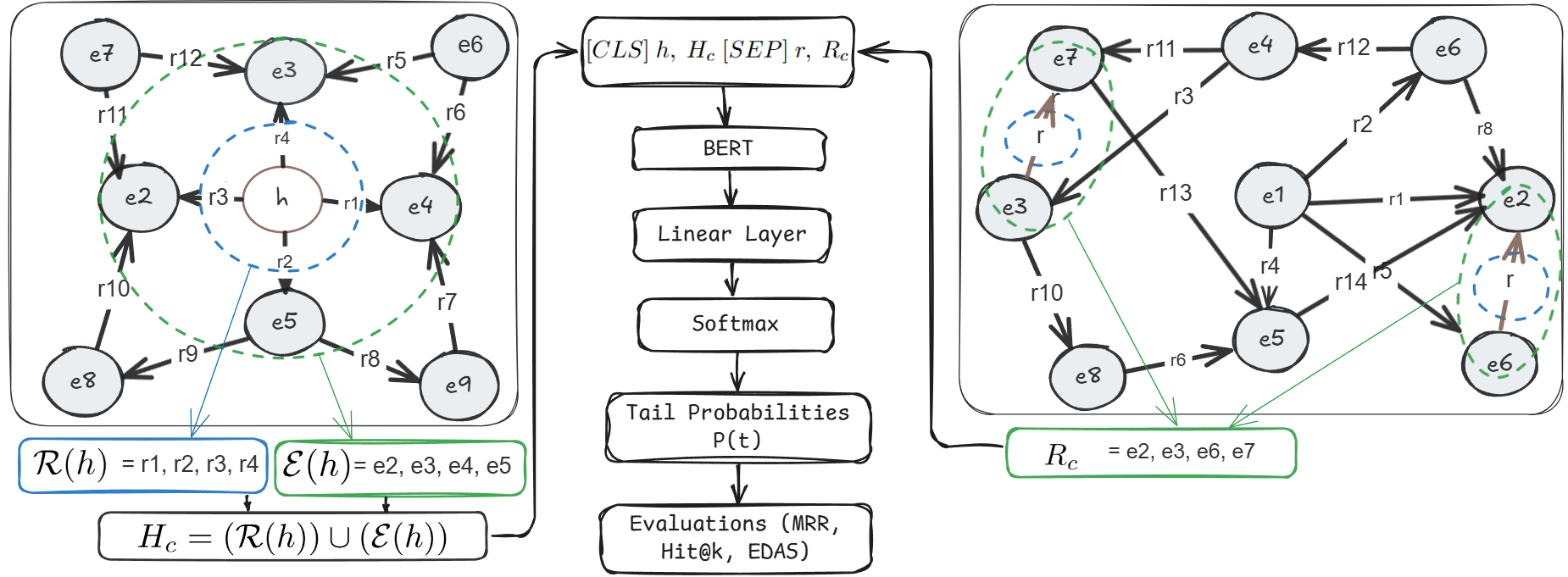
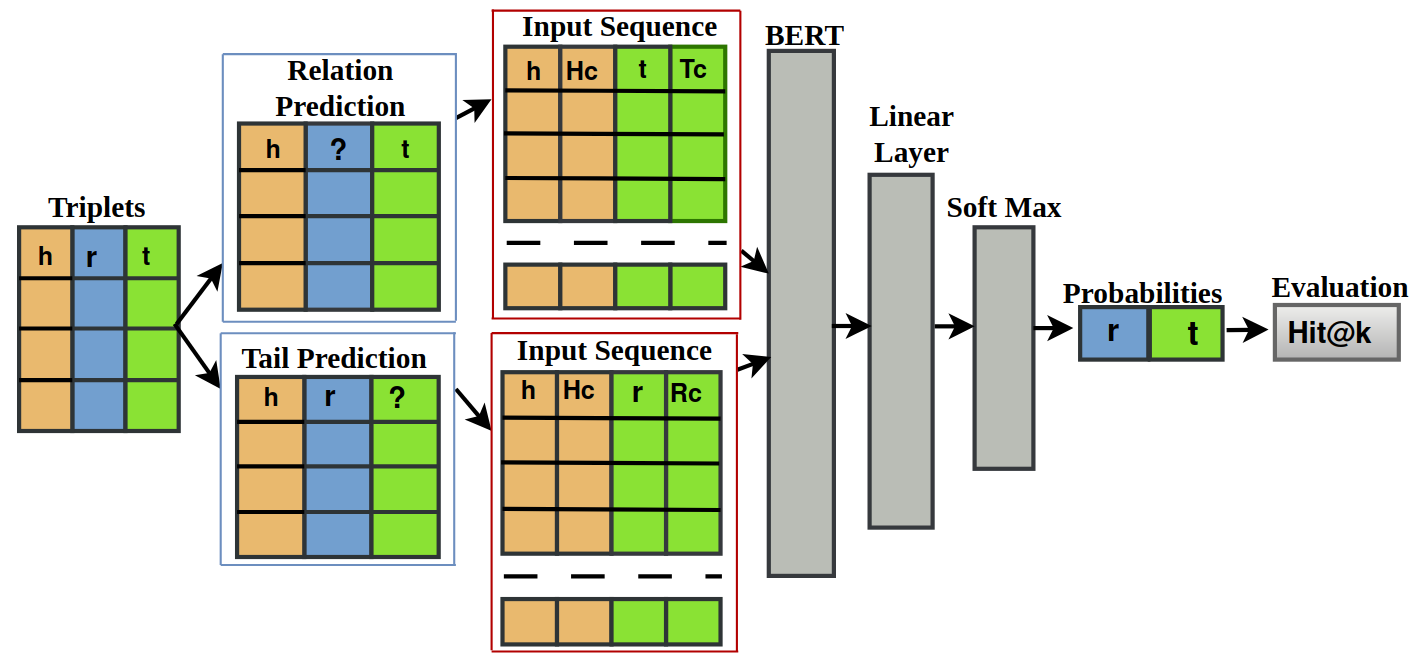
Knowledge Graph Completion (KGC) seeks to predict missing entities (e.g., heads or tails) or relationships in knowledge graphs (KGs), which often contain incomplete data. Traditional embedding-based methods, such as TransE and ComplEx, have improved tail entity prediction but struggle to generalize to unseen entities during testing. Textual-based models mitigate this issue by leveraging additional semantic context; however, their reliance on negative triplet sampling introduces high computational overhead, semantic inconsistencies, and data imbalance. Recent approaches, like KG-BERT, show promise but depend heavily on entity descriptions, which are often unavailable in KGs. Critically, existing methods overlook valuable structural information in the KG related to the entities and relationships. To address these challenges, we propose Multi-Context-Aware Knowledge Graph Completion (MuCo-KGC), a novel model that utilizes contextual information from linked entities and relations within the graph to predict tail entities. MuCo-KGC eliminates the need for entity descriptions and negative triplet sampling, significantly reducing computational complexity while enhancing performance. Our experiments on standard datasets, including FB15k-237, WN18RR, CoDEx-S, and CoDEx-M, demonstrate that MuCo-KGC outperforms state-of-the-art methods on three datasets. Notably, MuCo-KGC improves MRR on WN18RR, CoDEx-S, and CoDEx-M datasets by 1.63%, 3.77%, and 20.15% respectively, demonstrating its effectiveness for KGC tasks.
@inproceedings{gul-2025-mucokgc,
    title = "MuCo-KGC: Multi-Context-Aware Knowledge Graph Completion",
    author = "Gul, Haji and Naim, Abdul Ghani and Bhat, Ajaz Ahmad",
    booktitle = "Advances in Knowledge Discovery and Data Mining (PAKDD)",
    year = "2025",
    publisher = "Springer",
    doi = "10.1007/978-981-96-8298-0_1",
    url = "https://dl.acm.org/doi/10.1007/978-981-96-8298-0_1"
}2MuCoS: Efficient Drug–Target Discovery via Multi-Context-Aware Sampling in Knowledge GraphsBioNLP Workshop @ ACL 2025+
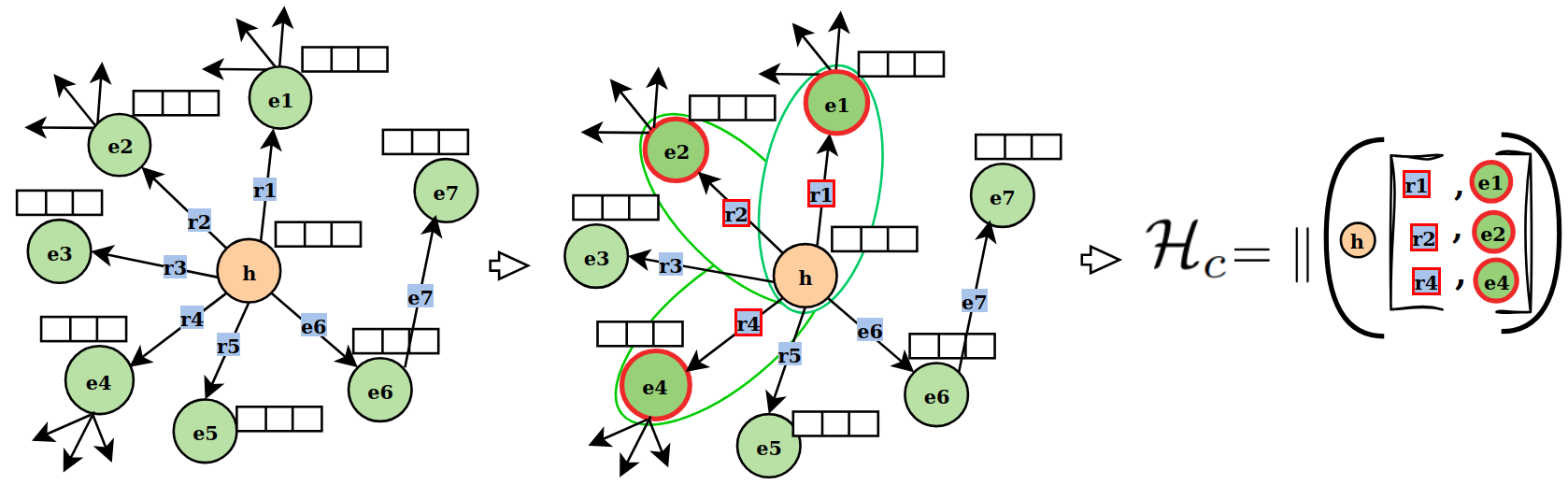
Accurate prediction of drug-target interactions is critical for accelerating drug discovery. In this work, we frame drug-target prediction as a link prediction task on heterogeneous biomedical knowledge graphs (KGs) that integrate drugs, proteins, diseases, pathways, and other relevant entities. Conventional KG embedding methods such as TransE and ComplEx are hindered by their reliance on computationally intensive negative sampling and their limited generalization to unseen drug-target pairs. To address these challenges, we propose Multi-Context-Aware Sampling (MuCoS), a novel framework that prioritizes high-density neighbours to capture salient structural patterns and integrates these with contextual embeddings derived from BERT. By unifying structural and textual modalities and selectively sampling highly informative patterns, MuCoS eliminates the need for negative sampling, significantly reduces computational overhead, and improves generalization to unseen drug-target pairs and targets. Extensive experiments on the KEGG50k and PharmKG-8k datasets demonstrate that MuCoS outperforms competitive baselines, achieving up to 13% improvement in MRR for general relation prediction on KEGG50k, up to 22% improvement in MRR on PharmKG-8k, and up to 6% improvement in dedicated drug-target relation prediction on KEGG50k.
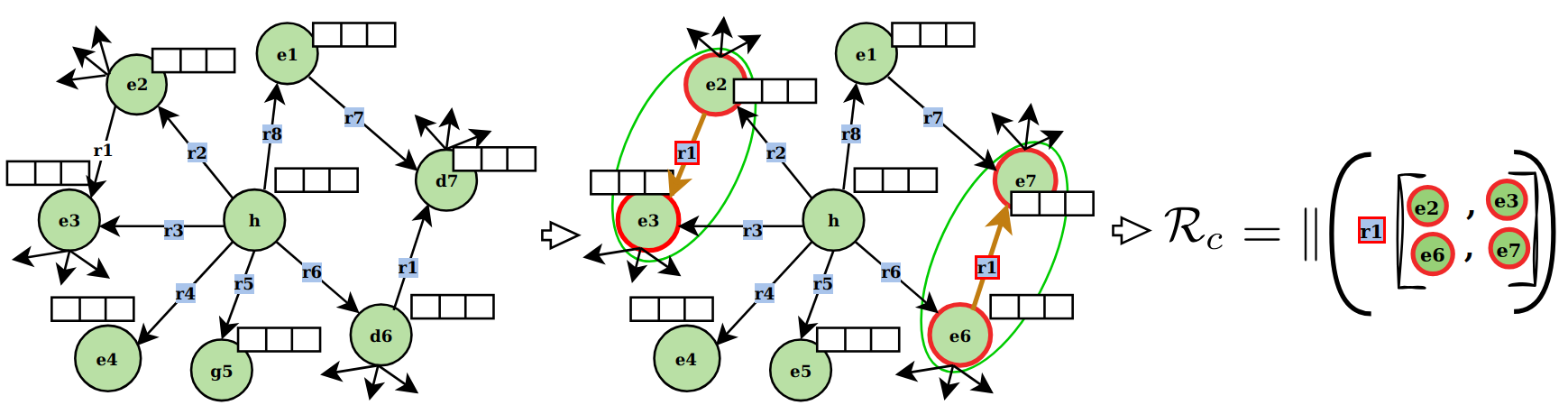
@inproceedings{gul-etal-2025-mucos,
    title = "{M}u{C}o{S}: Efficient Drug{--}Target Discovery via Multi-Context-Aware Sampling in Knowledge Graphs",
    author = "Gul, Haji and Naim, Abdul Ghani and Bhat, Ajaz Ahmad",
    booktitle = "Proceedings of the 24th Workshop on Biomedical Language Processing",
    month = aug,
    year = "2025",
    address = "Vienna, Austria",
    publisher = "Association for Computational Linguistics",
    url = "https://aclanthology.org/2025.bionlp-1.27/",
    doi = "10.18653/v1/2025.bionlp-1.27",
    pages = "319--327",
    ISBN = "979-8-89176-275-6"
}3KG-EDAS: A Meta-Metric Framework for Evaluating Knowledge Graph Completion ModelsIEEE BigData 2025+
[ DUMMY — replace with the real abstract for this paper. ]

[ DUMMY BibTeX — paste the real citation here. ]
4Evaluating Knowledge Graph Complexity via Semantic, Spectral, and Structural Metrics for Link PredictionIEEE BigData 2025+
[ DUMMY — replace with the real abstract for this paper. ]

[ DUMMY BibTeX — paste the real citation here. ]
5When Metrics Disagree: A Meta-Analysis of Knowledge-Graph-Completion Model BenchmarkingIEEE ICDM 2026+
[ DUMMY — replace with the real abstract for this paper. ]

[ DUMMY BibTeX — paste the real citation here. ]
6Evaluating Cumulative Spectral Gradient as a Complexity MeasureMusIML Workshop @ ICML 2025+
[ DUMMY — replace with the real abstract for this paper. ]

[ DUMMY BibTeX — paste the real citation here. ]
7KG-EDAS: A Meta-Metric Framework for Evaluating Knowledge Graph Completion ModelsGCLR Workshop @ AAAI 2025+
[ DUMMY — replace with the real abstract for this paper. ]

[ DUMMY BibTeX — paste the real citation here. ]
8A Contextualized BERT Model for Knowledge Graph CompletionMusIML Workshop @ NeurIPS 2024+
[ DUMMY — replace with the real abstract for this paper. ]

[ DUMMY BibTeX — paste the real citation here. ]
Contact
- Email: 23h1710@ubd.edu.bn