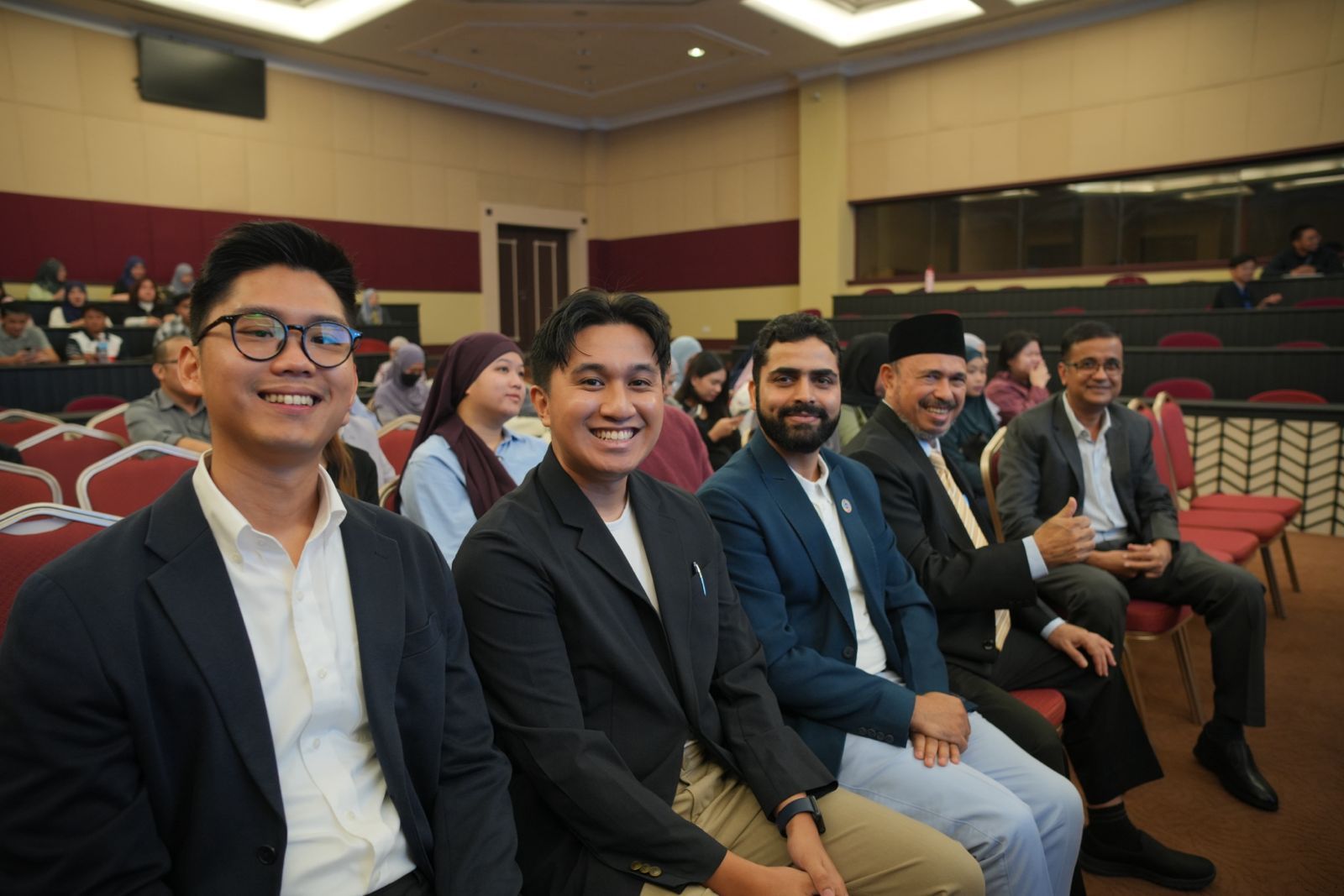
Event: Artificial Intelligence in Academia & Office: The Responsible Way Forward
Role: Panelist
Venue: Universiti Brunei Darussalam (UBD)
Date: 01 April 2026
Panelists:
– Imamull Qhaeer, Co-Founder, AICREATIVV
– Dr Ajaz Bhat, Assistant Professor, UBD School of Digital Science
– Yip Chong, Solutions Architect, Dynamik Technologies
Moderator: Prof Dr Hj Mohammad Nabil Almunawar, UBD School of Business and Economics
🎤 Event Overview
Bringing together perspectives from academia and industry, this panel session explored how AI can be applied responsibly in both learning and professional environments. Hosted at Universiti Brunei Darussalam, the discussion convened educators, technologists, and policymakers to address a timely question: As AI systems grow more capable, how do we ensure they augment — rather than undermine — human judgment, ethics, and purpose?
I was honored to contribute as a panelist, representing UBD, and to share teaching and research-informed perspectives on the future of education, AI governance, and human-centered design.
🧭 Key Ideas Shared
🔍 Reframing the Question: AI vs. Education
A common concern among educators is: What happens to education if AI gets better at critical thinking and reasoning? But this framing misses the point. To answer it well, we must first isolate the purposes of AI and education:
- AI’s purpose: Build systems that outperform humans in specific, well-defined domains.
- Education’s purpose: Cultivate human capacities — cognitive, ethical, creative, and social — that enable individuals to navigate ambiguity, lead with judgment, and steward technology responsibly.
Even if AI eventually surpasses human reasoning in breadth and speed, the goal of education does not become obsolete — it becomes more critical.
🎯 Four Core Goals of Education (in an AI-Rich World)
I proposed that education should focus on four interconnected dimensions of human enhancement:
| Goal | Focus | Why It Matters with Advanced AI |
|---|---|---|
| Mental Model Reimagining | Cognitive flexibility, systems thinking | Enables humans to conceptualize, frame, and redirect AI applications |
| Knowledge & Skill Acquisition | Episodic & procedural learning | Grounds AI use in domain expertise and practical judgment |
| Reasoning & Critical Thinking | Executive function, logical analysis | Allows humans to audit, challenge, and refine AI outputs |
| Emotional & Ethical Development | Socio-emotional intelligence, moral reasoning | Ensures AI deployment aligns with human values and societal good |
If we view education purely as a pipeline for job-ready outputs, AI could theoretically automate many of those roles. But if we see education as human development — fostering adaptable, wise, ethically-grounded individuals — then its mission is irreplaceable.
🔄 Process Over Product: Rethinking How We Measure Learning
“For business, it ends when the item ships. For a teacher, it doesn’t end when the student passes.”
I emphasized the need to shift educational assessment from end-product metrics (grades, credentials, placement rates) toward process-oriented growth:
- Measuring the delta in a student’s reasoning, creativity, or ethical reflection over time
- Designing iterative challenges that reward adaptation, not just correctness
- Cultivating a mentorship mindset — where educators create new opportunities as students evolve
This approach prepares learners not just to use AI, but to guide, question, and govern it.
🌐 Livelihoods, Policy, and the Human-AI Partnership
Looking ahead: What if AI automates most tasks?
My response: Humans must evolve into stewards, integrators, and critical overseers of intelligent systems. This transition requires:
- New economic frameworks to support livelihoods in highly automated sectors
- Policy innovation that prioritizes human agency, safety, and equity
- Research pivots toward AI that is controllable, interpretable, and auditable — moving beyond opaque, black-box models
I highlighted work by researchers like Yoshua Bengio, who advocate for transparent, value-aligned AI architectures. Interpretability alone isn’t a silver bullet, but paired with robust oversight and human-centered design, it’s essential for keeping AI aligned with human goals.
✅ TL;DR — Two Imperatives
- Educate for enhancement: Train students in sharper cognitive modeling, adaptive thinking, and grounded ethical judgment — not just task execution.
- Build AI for stewardship: Prioritize controllable, interpretable, and governable AI systems designed with human oversight in mind.
🤝 Connections & Collaboration
The panel fostered rich dialogue across sectors:
- Industry insights from AICREATIVV and Dynamik Technologies on real-world AI deployment challenges
- Academic perspectives from UBD’s Schools of Digital Science and Business & Economics on curriculum innovation and responsible research
- Policy-aware framing from the moderator, Prof Dr Hj Mohammad Nabil Almunawar, on scaling ethical AI practices nationally
These exchanges reinforced a shared commitment: advancing AI not as a replacement for human judgment, but as a tool to amplify it — responsibly, inclusively, and sustainably.
🌟 Personal Notes
Participating in this panel reaffirmed my belief that the most urgent challenge in AI isn’t technical capability — it’s alignment. Alignment with human values, with educational purpose, with long-term societal well-being.
I’m grateful to the organizers for convening this timely conversation, and to my fellow panelists for their thoughtful, diverse perspectives. To our SDS students and colleagues: let’s continue to lead by example — building AI systems that are not just smart, but wise; and educating learners who are not just skilled, but sovereign in their use of technology.
The future isn’t about humans versus AI. It’s about humans with AI — guided by purpose, grounded in ethics, and driven by a commitment to flourish together.
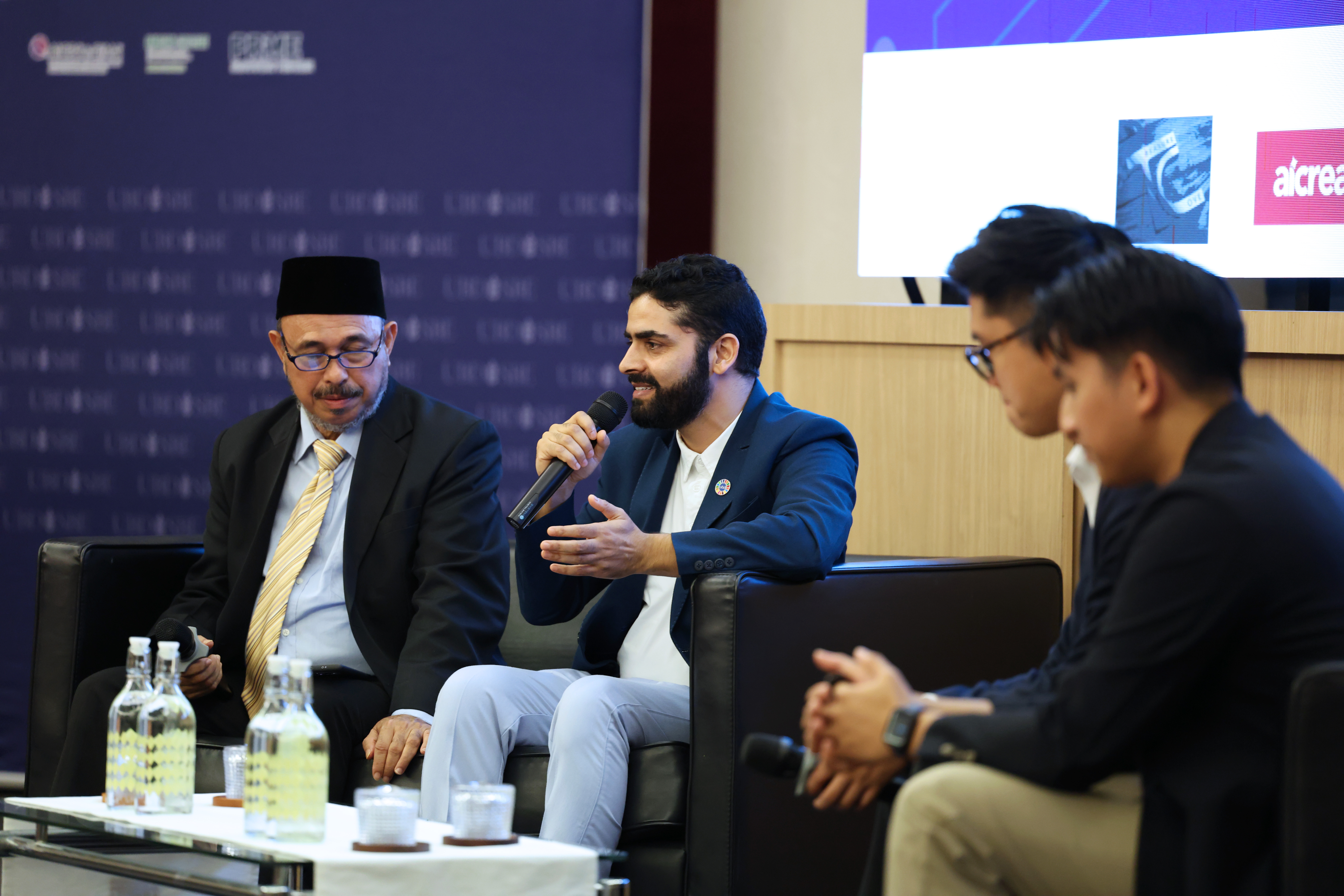
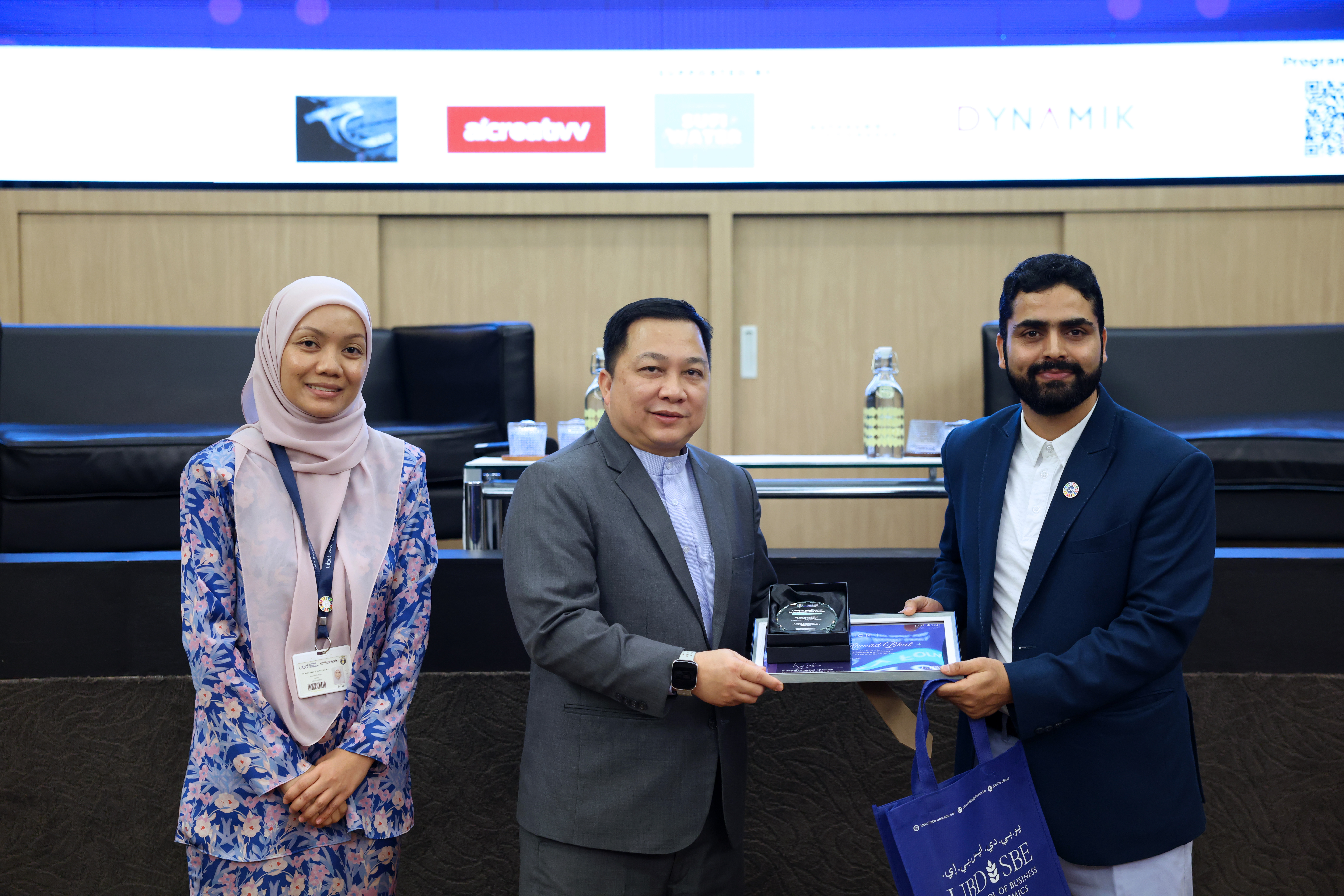
“AI in Academia & Office: The Responsible Way Forward” — Panel at Universiti Brunei Darussalam, 1 April 2026